How to Properly Store Niche Fragrances to Protect Every Bottle

How to Properly Store Niche Fragrances to Protect Every Bottle

Last Updated: October 25, 2026

Quick Summary

To properly store niche fragrances, keep bottles cool, dark, dry, and upright in a closet, drawer, or cabinet away from heat, light, and humidity. Aim for a steady 55°F to 70°F, keep each bottle in its original box, and tighten the cap after every use to slow oxidation.

  • A bathroom is the worst room for perfume because shower steam raises humidity and temperature swings.
  • A bottle kept at a constant 68°F typically fares better than one swinging between 60°F and 80°F daily.
  • Store bottles upright so liquid does not press against the seal and cause leaks or clogs.
  • Write the purchase date and opening date on a sticker on each bottle or box.
  • A dedicated fragrance refrigerator can help in very hot climates or for unopened bottles.

Table of Contents

What You'll Need Before You Store Your Fragrances

A cool, dark, dry spot is the single most important thing you can give a bottle of perfume. That one choice does more for a fragrance than any shelf or display case ever will. This guide from MASTAAN Perfumes walks through the storage habits that keep a collection intact for years.

That makes proper storage worth the effort. A few simple supplies set you up:

  • A closet, drawer, or cabinet away from heat and light
  • The original boxes for each bottle
  • A small tray or shelf liner to keep bottles upright
  • A notebook or app to track what you own and when you opened it

Skip the fancy display shelf. The best way to store perfume is boring, and boring is what protects it.

Step 1: Pick the Best Way to Store Perfume in a Cool, Dark, Dry Place

Cool, dark, and dry beats every other option. Heat speeds up chemical breakdown. Light degrades the oils. Humidity invites trouble with the seal and the juice itself. But "cool" is vague, and vague advice is hard to act on. Here is what those words mean in practice.

Why Heat, Light, and Humidity Damage Fragrance

Fragrance is a balance of oils, alcohol, and aromatic compounds. Heat pushes that balance out of tune. Sunlight breaks down the molecules that give a scent its character.

A bathroom is the worst room in the house for a perfume bottle. Steam from showers raises humidity, and the temperature swings every time someone runs hot water. For a closer look at why bathrooms ruin perfume, read does perfume expire in the bathroom.
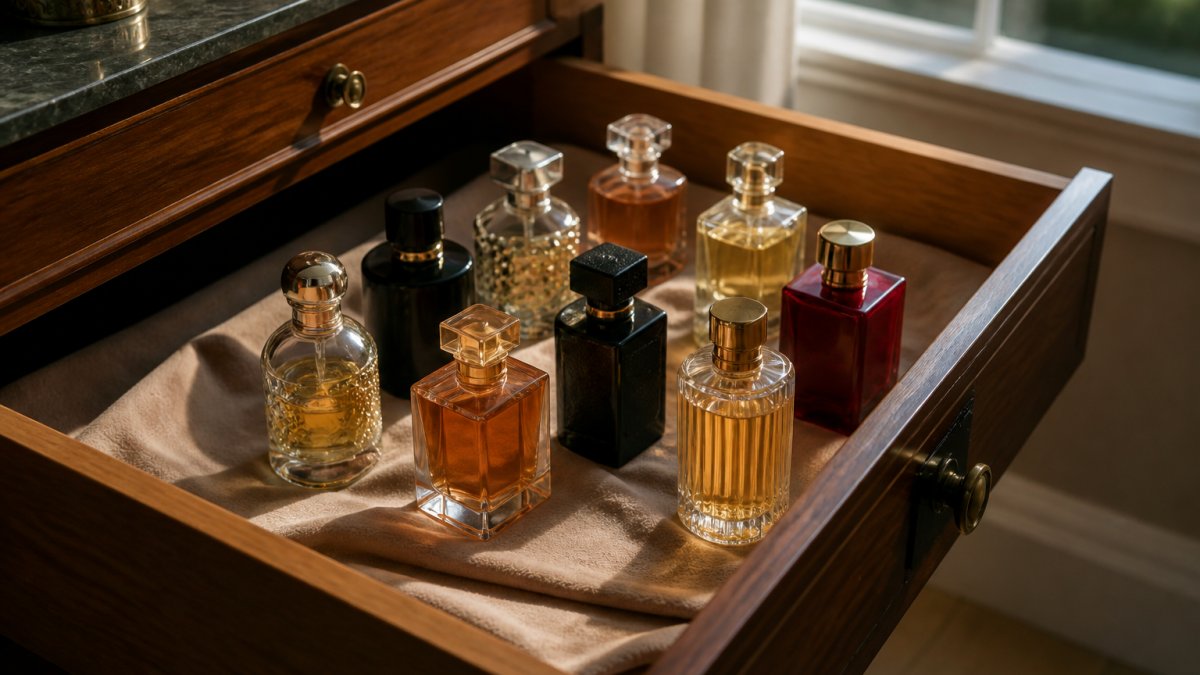
A wooden dresser drawer lined with soft cloth holding several elegant perfume bottles standing upright, soft daylight from a nearby window, calm organized home interior

Temperature Guidance: Stable Beats Specific

Most fragrance practitioners suggest aiming for a steady range between 55°F and 70°F (13°C-21°C). But the exact number matters less than consistency. A bottle kept at a constant 68°F will typically fare better than one that swings between 60°F and 80°F every day. Fluctuations cause the liquid to expand and contract, which stresses the seal and can let air in.

Avoid spots near radiators, heating vents, ovens, or appliances that cycle on and off. A closet shelf or a drawer in an interior room usually holds a more stable temperature than a windowsill or an exterior wall. Check the spot twice a year: if it feels warm to the touch or gets direct sun at any point in the day, move the collection.

Choosing a Closet, Drawer, or Cabinet

Any interior spot with steady conditions works. A bedroom closet shelf, a dresser drawer, or a closed cabinet all do the job. Keep bottles off the windowsill and away from radiators, heating vents, and appliances that run warm. If you live in a humid climate, a small silica gel packet in the drawer can help absorb excess moisture without drying out the fragrance.

Step 2: How to Store Perfume After Opening It

Once a bottle is open, air becomes the enemy. Every spray pulls in a small amount of air, and oxygen slowly reacts with the fragrance oils. That process, oxidation, is the main reason an opened bottle drifts from its original scent over time.

How to store perfume after opening comes down to a few habits:

  • Tighten the cap after every use
  • Keep the bottle closed between sprays, not left open on the counter
  • Store opened bottles in the same cool, dark spot as unopened ones
  • Use a consistent rotation so older bottles get used before they sit too long

Unopened bottles age more slowly because the seal keeps air out. Opened bottles still hold up well when stored right, but they deserve the most attention.

Step 3: Should Perfume Be Kept in Its Box?

Yes, keeping perfume in its box is one of the easiest wins in storage. The original box blocks light completely and adds a layer of insulation against small temperature shifts. It also keeps the bottle from knocking against others in a drawer.

Boxes help in three ways:

  • They block light that fades and alters a scent
  • They cushion the bottle against bumps and chips
  • They keep the batch details and name handy for reference

If the box is long gone, a small opaque container or a soft pouch works as a stand-in. The goal is the same: block light and reduce exposure.

Step 4: Store Bottles Upright to Prevent Leakage and Evaporation

Bottles belong upright, always. Laying a bottle on its side lets liquid press against the seal. Over time that can cause slow leakage and let air slip in, which speeds evaporation and oxidation.

Shop Personalized Perfume Bottles →

Upright storage also keeps the sprayer working. A bottle stored on its side can let juice pool in the atomizer tube, and the first sprays after that may sputter or clog.

Watch out: storing bottles loose in a drawer lets them tip and roll into each other. A small tray or a row of upright slots prevents chips and cracks that ruin a seal for good.

Step 5: Tailor Storage to Bottle Types, Atomizers, and Collections

Different bottles need slightly different handling. A heavy glass flacon with a ground stopper behaves nothing like a travel atomizer, and a growing collection needs a system that scales.

  • Full-size bottles: store upright in the box, cap on, in a drawer or cabinet. If the box is gone, an opaque container or soft pouch works.
  • Travel atomizers: keep them filled and sealed, and check the cap before packing. Store them upright in a small tray so they do not tip and leak.
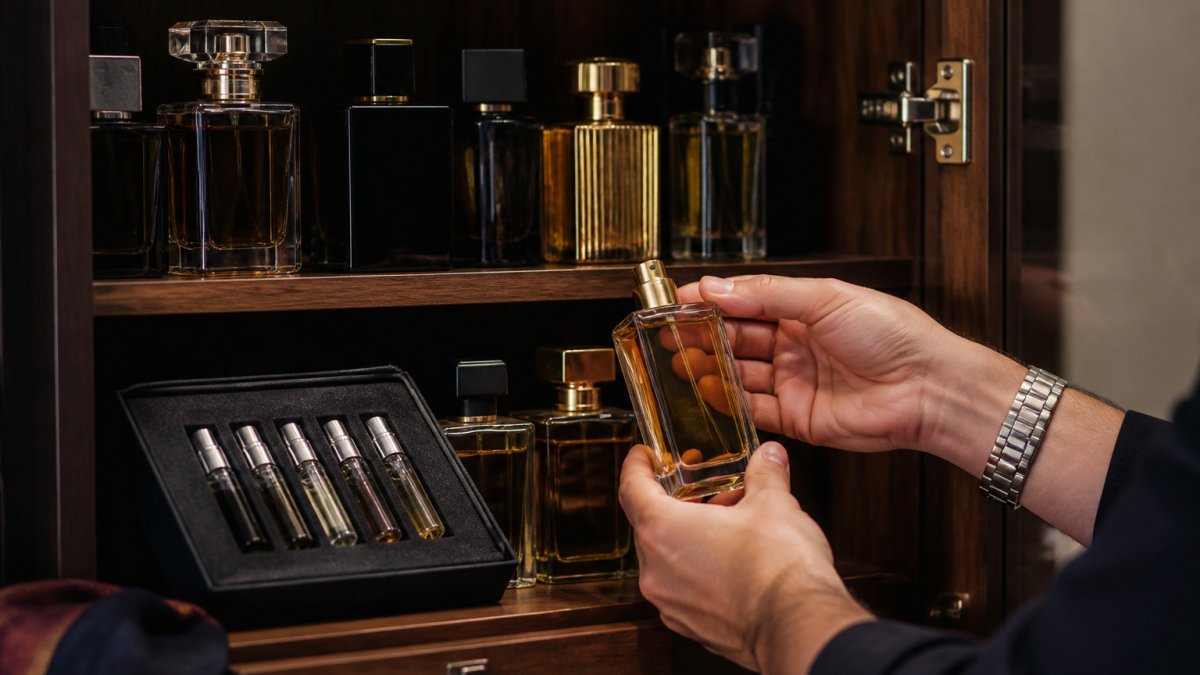
  • Small samples and discovery sizes: stand them upright in a tray so they do not tip and leak. A dedicated sample organizer keeps them from getting lost.
  • Splash bottles: these are more prone to evaporation and contamination. Keep the stopper tight and consider decanting a small amount into a sprayer for regular use.

For collectors building a wardrobe, a discovery set makes a smart storage anchor. The MASTAAN discovery set holds four 5 ml fragrances that stand neatly upright and take up little space. If the collection is growing, these steps for building a luxury perfume collection pair well with a simple rotation plan. A signature fragrance wardrobe built around discovery sets also keeps samples organized instead of scattered in a drawer.

Mastaan Discovery Set | 4×5ml Perfume Collection

Long-Term Storage and Collection Rotation

A simple labeling system keeps a collection manageable. Write the purchase date and opening date on a small sticker on the bottom of each bottle or on its box. That gives you a clear record of what is aging and what is still fresh.

Rotate what you wear. Move older opened bottles to the front and let the newest ones rest in the back. Check rarely used fragrances every few months: a quick sniff and a look at the color will tell you if they are still sound. If a bottle has turned, remove it from the collection so it does not affect the others.

Refrigeration: When It Helps and When It Is Unnecessary

Refrigeration is a common question. A dedicated fragrance refrigerator can help in very hot climates or for long-term storage of unopened bottles. But a shared kitchen refrigerator is usually a bad idea: food odors can migrate into the fragrance, and the constant opening and closing causes temperature swings. Condensation is another risk when a cold bottle is brought into a warm room. For most collections, a cool, dark drawer is simpler and safer than refrigeration.

Different bottle types need slightly different handling, so here is how each one should be stored.

Bottle type How to store it
Full-size bottles Upright in the box, cap on, in a drawer or cabinet
Travel atomizers Filled, sealed, cap checked, upright in a small tray
Small samples and discovery sizes Upright in a tray or dedicated sample organizer
Splash bottles Stopper tight; consider decanting a small amount into a sprayer

How Long Does Perfume Last, and How to Tell It Has Changed

Most fragrances hold their character for several years when stored well, and opened bottles can stay true for a long stretch with good habits. Exact timelines vary by formula and conditions, so treat any specific number as a rough guide.

Signs a fragrance has changed:

  • The top notes smell sharp or sour
  • The color has darkened noticeably
  • The scent fades much faster than it used to
  • The liquid looks cloudy or has particles in it

A changed scent is not always a lost cause, but it usually means the bottle sat somewhere too warm or too bright. If a favorite is fading faster on skin than it used to, these tips on making perfume last longer on skin can help narrow down whether the issue is storage or application.

Common Storage Mistakes to Avoid

The same few errors show up again and again. Most are easy to fix.

  • Keeping bottles in the bathroom. Steam and heat swings do the most damage here.
  • Displaying perfume in direct sun. A pretty shelf by a window fades a scent fast.
  • Leaving caps off. Air gets in, and oxidation starts sooner.
  • Storing bottles on their side. This invites leaks and clogs the sprayer.
  • Tossing the boxes. The box is free protection against light and bumps.
  • Letting bottles sit near a radiator or vent. Steady heat quietly breaks a fragrance down.

A good rule: if a spot feels warm or bright, it is the wrong spot. A cool, dark drawer almost always wins.


Protecting a collection starts with the same few habits: keep bottles cool, dark, dry, and upright, and keep the boxes. MASTAAN Perfumes builds fragrances meant to be worn and kept, from the smoky depth of Royal Elixir to the woody confidence of Dark Stone. Selected bottles can be personalized with a name or message, which makes storage feel less like housekeeping and more like caring for something worth keeping. Get started with MASTAAN Perfumes and give every bottle the conditions it deserves.

Dark Stone 3.4oz Eau de Parfum
Royal Elixir 3.4oz Extrait de Parfum

Frequently Asked Questions

Where is the best place to store niche fragrances?

A closet shelf, dresser drawer, or closed cabinet away from windows works best. These spots stay cool, dark, and dry, which is exactly what niche fragrances need. Avoid bathrooms, kitchens, and any spot near a radiator, heater, or sunny windowsill. If you keep several bottles, store them in a single dedicated drawer so you can check on them easily and rotate what you wear.

Should perfume be kept in its box?

Keeping a perfume in its original box adds a layer of protection from light and air, and it slows evaporation around the cap and atomizer. If you no longer have the box, a closed drawer or cabinet gives similar cover. For bottles you wear often, the box matters less, but for anything you plan to save, the box is worth keeping.

Does heat or sunlight affect perfume?

Yes. Heat and direct sunlight can break down a fragrance over time, shifting its scent profile and shortening its shelf life. Store bottles away from windows, lamps, and appliances that give off warmth, and keep the room at a consistent temperature rather than letting it swing between hot and cold. A cool, dark drawer avoids both problems at once.

How long does perfume last once opened?

An opened fragrance often stays in good condition for several years when stored well, though how long varies by formula and conditions. Signs it has changed include a sharper alcohol smell, a dulled or sour top note, or a darker color. Keep bottles capped, upright, and out of heat to help preserve scent quality, and rotate your collection so nothing sits untouched for years.

Recent Articles

The Beginner's Guide to Woody Fragrance Notes
ARTICLE

The Beginner's Guide to Woody Fragrance Notes

Last Updated: November 4, 2026 Quick Summary Woody fragrance notes are scent materials that smell of wood, bark, roots, and resin, and they form the warm, grounding base of a perfume. In a woody fragrance, these wood materials carry the dry-down rather than the opening, so the scent usually surfaces late, after the brighter top notes have burned off. Beginners should learn a few key woods, such as creamy sandalwood and dry cedarwood, then test on skin rather than paper. Top notes fade in minutes, heart notes form the core, and base notes like woods linger longest. Sandalwood is creamy and soft, while cedarwood is dry, clean, and structured. Vetiver smells earthy and rooty, closer to damp garden soil than a plank of wood. Spray on skin and check the dry-down at the four-hour mark before deciding. Lighter woods like sandalwood and cedarwood suit warm weather; heavier oud suits cooler evenings. Table of Contents What Are Woody Fragrance Notes and Why They Matter What Are Top, Middle and Base Notes in Perfume A Simple Fragrance Notes Chart for Beginners Common Fragrance Notes That Pair With Woods Sandalwood, Cedarwood and Other Woods to Know A Beginner's Texture Vocabulary Sandalwood: Creamy and Smooth Cedarwood: Dry and Structured Vetiver, Patchouli, Oud and Resins Side-by-Side Comparison Woody Notes Perfume for Women and Men How to Test and Choose Your First Woody Scent A First-Try Decision Tree Paper Versus Skin The Testing Routine Wear-Context Guidance Try a Woody Fragrance Before You Commit Frequently Asked Questions What Are Woody Fragrance Notes and Why They Matter Woody fragrance notes are scent materials that smell of wood, bark, roots, and resin, and they form the warm, grounding foundation of a perfume. Readers who want to understand which fragrance notes help a scent last longer can consult Best Fragrance Notes for a Long Lasting Scent. That distinction matters more than most guides admit. Many newcomers smell a scent in the first minute, decide it is "not for them," and walk away before the wood has even arrived. Below, the guide covers the note structure behind every perfume, a plain-language vocabulary, the woods worth knowing, and a practical testing routine. The first-try decision tree near the end is the part most beginners need most. What Are Top, Middle and Base Notes in Perfume Top, middle, and base notes are the three stages a perfume moves through as it meets air and skin. Top notes appear first and fade fastest, middle notes form the core, and base notes hold the longest. This structure is often drawn as a note pyramid. Top notes: the bright opening, usually citrus, bergamot, or light spice. They last minutes, not hours. Heart notes: the main character of the scent, often florals, fruit, or soft spice. They emerge as the top fades. Base notes: the foundation, including woods, amber, musk, and resins. They linger longest and shape the dry-down. The dry-down is simply what remains on skin after the volatile materials have gone. For a woody fragrance, the dry-down is the main event, not an afterthought. A Simple Fragrance Notes Chart for Beginners A fragrance notes chart maps scent families to the materials that define them, so a beginner can describe what they like in words. Use this reference when reading product descriptions. Note family Common materials What it smells like Typical layer Citrus Bergamot, lemon, grapefruit Bright, sharp, clean Top Floral Rose, peony, jasmine Soft, sweet, romantic Heart Spicy Pink pepper, nutmeg Warm, sharp, lively Top to heart Woody Sandalwood, cedarwood, vetiver Dry, creamy, grounding Base Resinous Oud, incense, amber Smoky, deep, rich Base Musk White musk Soft, skin-like, smooth Base Learn four or five of these rows and the average product page stops being a mystery. The vocabulary is the whole game at the start. Common Fragrance Notes That Pair With Woods Woods rarely stand alone. They are usually blended with citrus, florals, spice, amber, or musk, and the pairing decides whether the result reads fresh, warm, or smoky. Bergamot and other citrus notes lift a heavy wood and keep it from feeling dense. A common mistake is assuming "woody" means "masculine." Readers curious about how woods combine with other notes can learn beginner layering techniques in How Do You Layer Perfumes for Beginners?. Sandalwood, Cedarwood and Other Woods to Know Sandalwood, cedarwood, vetiver, patchouli, oud, and guaiac wood are the materials a beginner will meet most often, and each has a distinct scent profile worth learning before sampling. Diagram comparing aromatic profiles of raw sandalwood and cedarwood pieces beside a perfume bottle A Beginner's Texture Vocabulary Perfume descriptions lean on a small set of words that mean something specific. Learn these five and product pages become readable: Creamy: smooth and rounded, like the surface of a sanded wooden bowl or a spoon of vanilla custard. No sharp edges. Dry: the opposite of creamy, think pencil shavings, sawdust, or a sun-baked wooden deck. It can feel clean or austere depending on what it is paired with. Smoky: a charred or incense-like quality, closer to a fireplace than to fresh lumber. Many beginners find that they respond to one of these textures more than to a specific wood name. If you like creamy textures, you will likely enjoy sandalwood; if you like dry textures, cedarwood is the natural starting point. Sandalwood: Creamy and Smooth Sandalwood is the softest of the classic woods, with a creamy, milky, softly sweet character that reads smooth rather than sharp. It sits close to the skin and blends easily with florals, vanilla, and musk. Beginners who find cedar too dry usually prefer sandalwood first. Think of it as the wood equivalent of a soft blanket, present, but never loud. Cedarwood: Dry and Structured Cedarwood is dry, clean, and structured, with a pencil-shaving quality that gives a scent its spine. It reads more angular than sandalwood and pairs well with citrus and spice. Where sandalwood softens, cedarwood organizes. If sandalwood is a blanket, cedarwood is the frame underneath it. Vetiver, Patchouli, Oud and Resins Vetiver brings an earthy, rooty, slightly green dryness, closer to damp garden soil than to a plank of wood. Patchouli is darker and denser, with a moss-like depth that some beginners find heavy at first. Oud is resinous and smoky, the heaviest of the group, while guaiac wood adds a tarry warmth. Pine and cypress offer a cooler, more aromatic woodiness, closer to a forest walk than to a lumber yard. Side-by-Side Comparison Wood Texture Familiar comparison Intensity Best for beginners who like... Sandalwood Creamy, smooth Sanded wooden bowl, vanilla custard Soft to medium Soft, skin-close scents Cedarwood Dry, structured Pencil shavings, sun-baked deck Medium Clean, crisp scents Vetiver Earthy, rooty Damp soil after rain Medium to strong Green, grounded scents Patchouli Dense, mossy Forest floor, dark earth Strong Deep, moody scents Oud Resinous, smoky Tree sap, incense Very strong Rich, commanding scents Guaiac wood Tarry, warm Smoked wood, asphalt Strong Warm, smoky scents A common pattern is that readers who enjoy creamy textures gravitate to sandalwood, while those who prefer clean and crisp scents lean toward cedarwood. Neither choice is more advanced than the other, they simply suit different tastes. Shop Personalized Perfume Bottles → Woody Notes Perfume for Women and Men Woody notes perfume for women and men share the same materials but differ in balance. Women's compositions often pair woods with florals, fruit, or soft musk; men's compositions lean on citrus, spice, and resins. MASTAAN Perfumes offers both styles. La Royale Femme combines Turkish rose and peony with woody notes, and Royal Elixir blends oud and white amber with bergamot and pink pepper for a smoky, commanding profile. How to Test and Choose Your First Woody Scent Testing a woody scent properly takes a full day, not a single spray in a store. The routine below is the one worth following, and it is built around a simple principle: judge the dry-down, not the opening. A First-Try Decision Tree Before you sample anything, narrow the field with three questions: Do you prefer creamy or dry textures? Creamy points to sandalwood; dry points to cedarwood. How much intensity do you want? Soft and skin-close favors sandalwood or a light cedar blend; strong and commanding favors oud, patchouli, or guaiac wood. Which familiar scents do you already enjoy? If you like clean citrus, start with cedarwood paired with bergamot. If you like green and earthy scents, start with vetiver. If you like smoky and rich scents, start with oud or guaiac wood. Answer those three and you have a shortlist of two or three woods to test, far more useful than spraying everything on the shelf. Paper Versus Skin Paper strips are useful for one thing: screening out scents you dislike immediately. They show the opening and the first hour, but they flatten the dry-down and hide how a wood interacts with your skin. Skin reveals the version of the scent you will actually wear, because heat, movement, and skin pH all shift how a woody fragrance performs. Use paper to eliminate, and skin to decide. The Testing Routine Start with a discovery set rather than a full bottle. Small formats let you live with a scent before committing. A beginner who wants to test before committing can explore a discovery set of small fragrances. Spray on skin, not paper. Paper strips show the opening only; skin reveals the dry-down. Test one scent per arm. Two at once muddles the comparison. Note the opening, then wait thirty minutes. The heart notes appear here. Check the dry-down at the four-hour mark. This is the version of the scent you will actually wear. Wear it through a normal day. Heat, movement, and skin pH all shift how a woody fragrance performs. Compare before buying. Keep notes on which woods you responded to. Spraying two scents on the same arm and judging them minutes apart can make the comparison harder, because the second spray sits on top of the first.Mastaan Discovery Set | 4×5ml Perfume Collection Wear-Context Guidance Woody scents are not one-season materials. Lighter woods such as sandalwood and cedarwood are often worn in warm weather, while heavier woods such as oud are often chosen for cooler weather and evening wear. Longevity varies by person, so treat any scent as a trial rather than a guarantee (Exploring the impact of fragrance molecular and skin properties on the evaporation...). Beginners who want to sample several directions at once can explore the MASTAAN Discovery Set, which includes four 5 ml fragrances. Try a Woody Fragrance Before You Commit The safest way to enter woody territory is to start with one well-made scent built on a single clear wood idea. A reader ready to try a woody eau de parfum can shop Dark Stone and test it against their own skin.Dark Stone 3.4oz Eau de Parfum Longevity varies by person, so treat any scent as a trial rather than a guarantee. Skin pH, climate, and application point all influence how long a fragrance stays. Frequently Asked Questions What are woody notes in perfume? Woody notes are scent materials that smell like wood: sandalwood, cedarwood, vetiver, patchouli, oud, guaiac wood, pine and cypress. They usually sit in the base of a fragrance, where they give structure and help the scent last. A woody fragrance can be dry and sharp like cedar, creamy like sandalwood, or smoky and resinous like oud. Most perfumes use at least one wood, even floral ones, because woods hold the lighter notes in place. What does a woody fragrance smell like? It depends on the wood. Sandalwood reads creamy and softly sweet; cedarwood reads dry, clean and pencil-shaving sharp; vetiver is earthy and grassy; patchouli is dark and mossy; oud is smoky and resinous. Many woody fragrances add citrus, spice or amber on top, so the opening can feel bright before the wood settles in. The dry-down is where the wood shows its true character, typically after the opening has faded. Which woody fragrance notes are best for beginners? Start with sandalwood or cedarwood. Both are smooth, easy to wear and unlikely to overwhelm. Sandalwood suits anyone who likes creamy, softly sweet scents; cedarwood suits anyone who prefers dry, clean and structured scents. Try a discovery set or in-store sample first, and wear it for a full day before buying a full bottle. Once you know which wood you like, vetiver, patchouli and oud are easier to explore. Are woody fragrances suitable for everyday wear? Yes. A light woody scent with citrus or floral notes works well for the office, and a deeper woody blend suits evenings and cold weather. Apply one or two sprays to pulse points and let it settle; woods can smell stronger as they warm on skin. If you want a scent for daily wear, test it on your wrist first and check how it develops over the course of the day before committing to a full bottle. What is the difference between cedarwood and sandalwood in perfume? Cedarwood is dry, sharp and structured, with a clean pencil-shaving quality. Sandalwood is creamy, smooth and softly sweet, with a warmer finish. Cedarwood tends to feel more masculine and brisk; sandalwood feels rounder and more unisex. In a blend, cedarwood adds lift and definition, while sandalwood adds softness and depth. Both are common base notes and pair well with citrus, spice and amber. How do woody notes change as a perfume dries down? Woody notes usually appear after the top notes fade, after the top notes fade. At first the wood may feel sharp or green; as it warms on skin, it can turn smoother, creamier or smokier. The base can last several hours, though longevity varies by person, skin type and concentration. Testing on skin, not paper, is the only way to see how a woody fragrance will actually dry down on you. The challenge with woody notes is not finding them, it is learning to wait for them. MASTAAN Perfumes makes that easier with a curated collection of Oriental-French blends, a discovery set built for sampling, and personalized bottles for gifting. Start with the discovery set, test each scent through a full day, and let the dry-down make the decision. Shop Personalized Perfume Bottles Add mastaanperfumes.com as a preferred source on Google →

Read more
Best Unscented Lotions to Layer With Perfume: 7 Buying Rules
ARTICLE

Best Unscented Lotions to Layer With Perfume: 7 Buying Rules

Last Updated: November 2, 2026 Quick Summary The best unscented lotion to layer with perfume is a fragrance-free cream with humectants like glycerin, applied in a thin, even layer and allowed to set before fragrance. Choose texture by scent weight: light lotion for citrus, cream for amber and woods, balm for oud and leather. Unscented and fragrance-free are not the same claim; masking fragrances in unscented products can clash with perfume. Apply lotion to clean, dry skin, wait a minute or two, then spray pulse points and let dry without rubbing. Look for glycerin among the first few ingredients, plus ceramides or shea butter for a richer surface. Over-applying lotion creates a tacky film that traps scent unevenly and feels heavy. Heavier scent families like oud, amber, and leather may pair well with heavier cream or balm bases. Table of Contents Why the Best Unscented Lotion to Layer With Perfume Is a Texture DecisionLight lotions, creams, and balms: what each does under a fragrance What Makes a Fragrance-Free Body Lotion for Perfume Actually Work How to Layer Lotion and Perfume Without Muddying the ScentPulse points, timing, and the order that matters The Best Lotion to Make Perfume Last Longer: What to Look For on the Label Common Layering Mistakes That Weaken Your Fragrance Matching Your Lotion Base to Bold Scents Like Oud, Amber, and Leather Build Your Layering Routine Around a MASTAAN Fragrance Frequently Asked Questions Why the Best Unscented Lotion to Layer With Perfume Is a Texture Decision A good unscented lotion to layer with perfume is one whose texture suits both your skin and the fragrance you wear. That sounds simple. It isn't, because most shoppers pick a lotion by brand or price and never think about how the base interacts with the scent. This guide from MASTAAN Perfumes treats the choice as a buying decision with rules, not a guessing game. Here's the core tension most guides skip: a rich cream can hold a fragrance longer, but a heavy cream can also smother a delicate one. A light lotion keeps a bright citrus clean, yet it may do little to anchor a deep oud. Below are the buying rules that separate a base that helps a fragrance from one that fights it. Light lotions, creams, and balms: what each does under a fragrance Three textures, three jobs. Pick by the weight of the scent you plan to wear. Texture Feel Best paired with Trade-off Light lotion Fast-absorbing, thin Citrus, fresh, light florals Modest anchoring Cream Richer, slower to absorb Amber, woods, orientals Can mute delicate scents Balm Thick, occlusive Oud, leather, heavy resins Tacky feel if over-applied Light lotions tend to disappear into skin, leaving a bright fragrance room to stay bright. Creams leave a slightly richer surface that some people find suits heavier scents. Balms sit on top of the skin and can feel heavy under anything sheer. What Makes a Fragrance-Free Body Lotion for Perfume Actually Work A fragrance-free body lotion for perfume can add moisture without adding a competing smell. The label is where this gets decided. "Unscented" and "fragrance-free" are not the same claim. An unscented product may contain masking fragrances that neutralize its own smell, and those can clash with a perfume. A fragrance-free product skips added scent entirely, which is why it is the safer base for layering. Read for three things: Fragrance-free on the label, not just "unscented" or "natural scent." A short ingredient list, since fewer aromatic botanicals means less interference. No essential oils if you plan to layer a delicate fragrance, because citrus and floral oils compete. Watch out: a lotion marketed as "lightly scented" will sit under your perfume and change how it reads. If the base has a smell of its own, you are layering two fragrances whether you meant to or not. How to Layer Lotion and Perfume Without Muddying the Scent Layering lotion and perfume can come down to order and timing: moisturize first, let it settle, then apply fragrance to the spots where skin is warmest. A white lotion bottle and perfume glass resting on a marble vanity near a person's wrist and inner elbow. Pulse points, timing, and the order that matters Apply lotion to clean, dry skin and work it in fully. Wait a minute or two so the surface is set, not slick. Spray or dab fragrance on pulse points: wrists, inner elbows, base of the throat. Let the fragrance dry down without rubbing. Rubbing the wrists together is a common habit that many people avoid, since it can affect how the top notes develop. For the full step-by-step method, see how to layer perfumes for beginners. The Best Lotion to Make Perfume Last Longer: What to Look For on the Label A fragrance-free cream with humectants is one type of lotion to consider when layering with perfume. Humectants draw moisture into skin (The Role of Moisturizers in Addressing Various Kinds of Dermatitis: A Review). Scan for these on the label: Shop Personalized Perfume Bottles → Glycerin among the first few ingredients. Ceramides or shea butter for a slightly richer surface. No added fragrance or essential oils. A cream or balm texture if you wear heavy scents. For a deeper look at the mechanics, the guide to making perfume last longer on skin covers timing, storage, and application in more detail. Longevity varies by person, so treat any base as a possible helper, not a guarantee. Common Layering Mistakes That Weaken Your Fragrance Some common layering habits may affect how a fragrance wears. Applying perfume to dry skin. A dry base gives a fragrance little to hold onto. Using a scented lotion. The base and the perfume may compete. Rubbing after spraying. Friction breaks down the top notes. Over-applying lotion. A thick, tacky film traps the scent unevenly and feels heavy. The fix is a thin, even layer of fragrance-free cream, fully absorbed, before the fragrance goes on. Less base, better result. Matching Your Lotion Base to Bold Scents Like Oud, Amber, and Leather Bold scents are often paired with a richer base. Oud, amber, and leather compositions carry weight, and some people find a cream or balm suits them better than a light lotion. Fragrance Foundation guidance on scent families groups these into the woody, amber, and leather families, which behave differently from fresh citrus. A practical rule of thumb some people use: heavier scent families may pair well with heavier bases. If you are pairing a base with a deep wood, it helps to understand the scent profile first. What oud smells like explains the notes before you commit to a cream. Build Your Layering Routine Around a MASTAAN Fragrance A routine only matters once there is a fragrance worth building it around. MASTAAN Perfumes offers a small, deliberate collection rather than a wall of options: Royal Elixir, Dark Stone, Cherish, and La Royale Femme, plus a discovery set of four 5 ml fragrances for anyone who wants to try before committing to a full bottle. Start with the MASTAAN discovery set if you are still learning which scent families suit your skin and your base. Once you know, the Royal Elixir scent and layering guide walks through how that fragrance behaves with a cream base. Selected bottles can be personalized with a name or message, which makes the routine feel like yours. A fragrance-free cream, applied first and allowed to set, is one simple way to test how a base and a fragrance work together on your skin. Get started with MASTAAN Perfumes and build a layering routine around a fragrance chosen for your skin, not the shelf. Frequently Asked Questions Does unscented lotion make perfume last longer? It may help, though results vary. A lotion base may affect how a fragrance wears on skin. The effect varies by person, climate, and the fragrance itself. Choose a lotion that absorbs fully before you spray, and apply perfume to pulse points where skin is warmest. Think of it as improving the conditions for wear rather than guaranteeing a specific duration. Should you apply lotion before or after perfume? Apply lotion first and let it absorb for a minute or two, then spray perfume on top. Lotion applied over a fragrance may affect how it wears. If your skin feels tacky, wait longer before spraying. Some people apply a thin layer of unscented lotion to the wrists and neck before misting fragrance. Is fragrance-free lotion better than unscented lotion for layering? They are not the same thing. Fragrance-free means no added scent; unscented can still contain masking fragrances that neutralize a smell. For layering under perfume, fragrance-free is often a good choice because it is less likely to compete with your scent. Check the ingredient list for the word fragrance or parfum. If it appears, the product may still carry a faint scent even when the label says unscented. How much unscented lotion should you use before applying perfume? A thin, even layer is enough. Use roughly a pea-sized amount per pulse point, or a light application across the neck and wrists, and work it in until it disappears. Too much lotion can leave a film on the skin. Some people with drier skin prefer a slightly richer cream on the forearms and neck, while others with oilier skin may prefer a lighter lotion. Let it dry fully before spraying. The right base turns a good fragrance into a lasting one, and the wrong base quietly works against it. MASTAAN Perfumes pairs a focused collection with a discovery set so you can test textures and scents together before committing, and selected bottles can carry a personal engraving. Start with the discovery set, find the fragrance that fits, then build the routine around it. Shop Personalized Perfume Bottles Add mastaanperfumes.com as a preferred source on Google →

Read more