Last Updated: October 28, 2026
Quick Summary
A luxury scent provides a unique narrative through scent for luxury goods by carrying a brand's message, mood, and values straight to the emotional centers of the brain, where smell connects faster than sight or sound. The story then runs through product, packaging, retail, and digital touchpoints so the buyer carries it on their skin.
- Define your brand in three sensory-adjacent words, avoiding generic terms like luxury or quality.
- Map each brand attribute to a scent family, such as bold to woody-spicy or refined to floral-musk.
- Test on 10 to 15 target customers and ask what emotion the scent brings up.
- Keep one narrative brief and audit product, packaging, retail, and digital against it.
- A discovery set lets customers live with several scents before committing to a full bottle.
Table of Contents
- Why Scent Is the Most Memorable Brand Storytelling Tool
- Olfactory Branding Examples That Turn Scent into Identity
- How to Create a Signature Scent That Matches Your Brand
- Scent Marketing for Luxury Brands: From Packaging to Digital Touchpoints
- The Role of a Fragrance Discovery Set in Building Emotional Connection
- Personalization and Customization: Turning a Scent into a Personal Narrative
- How to Measure the Impact of Scent-Led Storytelling on Brand Loyalty
- Choose Your Signature Scent from MASTAAN Perfumes
- Frequently Asked Questions
Why Scent Is the Most Memorable Brand Storytelling Tool
Scent is the fastest route to memory. A fragrance can bring back a person, a place, or a feeling before a single word is spoken. That is why a luxury scent provides a unique narrative through scent for luxury goods: it tells a story the buyer carries on their skin.
A bottle is not just a product. It is a chapter in a larger story.
Olfactory storytelling is the practice of using fragrance to carry a brand's message, mood, and values. It works because smell connects straight to the emotional centers of the brain. Sight and sound pass through more filters first.
Most guides treat fragrance as decoration. That gets it wrong. Scent is a narrative device, and it deserves the same care as a logo or a tagline.
Below, we break down seven ways scent tells a luxury brand's story, plus a practical method for building one.
Olfactory Branding Examples That Turn Scent into Identity
The strongest olfactory branding examples share one trait: the scent matches the promise. A brand that sells calm does not build a sharp, aggressive fragrance. A brand that sells power does not build something soft and quiet.
Here is how the translation works in practice:
- Warm woods and amber read as grounded, confident, and timeless.
- Bright citrus and pepper read as modern, energetic, and bold.
- Florals and soft musk read as elegant, intimate, and refined.
- Leather, oud, and vetiver read as strength, depth, and mystery.
The lesson from luxury houses is simple. They do not chase trends with their signature scent. They pick a story and stay with it across every bottle, store, and campaign.
What most guides miss is consistency. A scent that shifts with every launch stops being a story and becomes noise.
How to Create a Signature Scent That Matches Your Brand
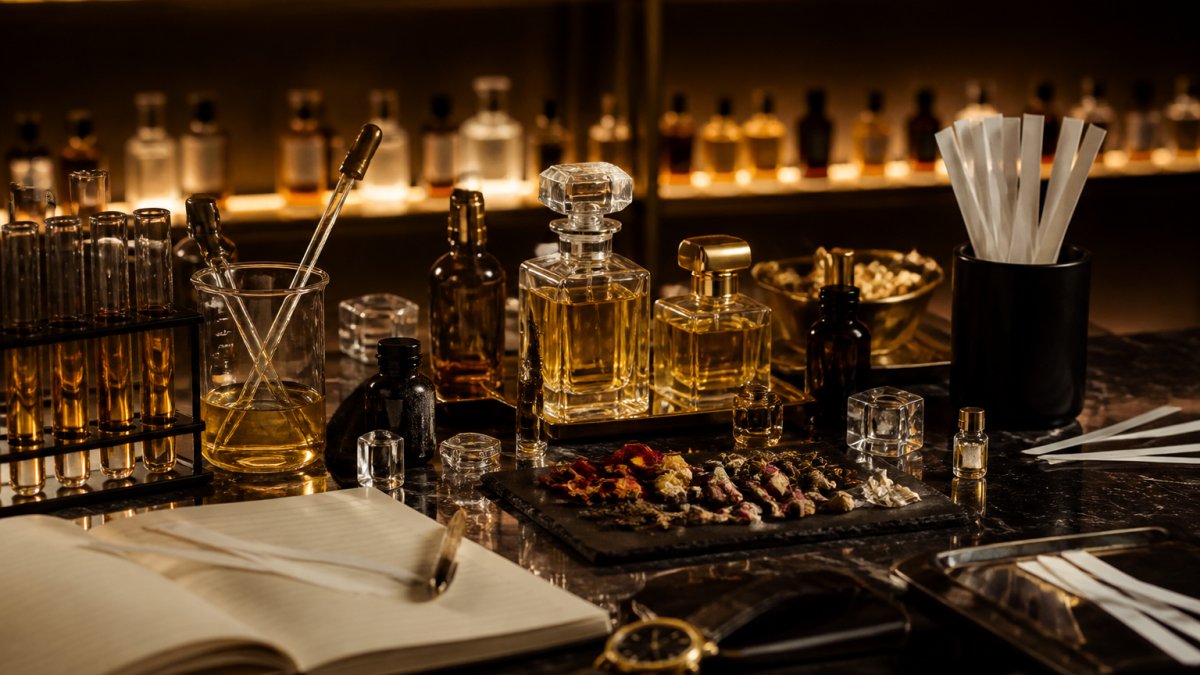
To create a signature scent, start with the story, not the notes. Define the feeling you want a customer to have, then work backward to the ingredients that carry it. This section provides a practical framework for translating brand attributes into scent choices, a step most guides skip.
Step 1: Define Your Brand in Three Words
Write down three adjectives that capture your brand's essence. Examples: bold, warm, refined. Avoid generic terms like "luxury" or "quality", they don't translate to scent. Instead, use sensory-adjacent words: "grounded," "luminous," "intimate."
Step 2: Map Each Word to a Feeling and a Scent Family
Use this translation table as a starting point. It connects common brand attributes to scent directions, based on widely used perfumery conventions.
| Brand Attribute | Desired Feeling | Scent Family Direction | Example Notes |
|---|---|---|---|
| Bold | Confidence, impact | Woody-spicy | Pepper, cedar, oud |
| Warm | Comfort, approachability | Amber-vanilla | Tonka, benzoin, vanilla |
| Refined | Elegance, restraint | Floral-musk | Iris, rose, white musk |
| Mysterious | Depth, intrigue | Leather-smoky | Leather, vetiver, incense |
| Fresh | Energy, clarity | Citrus-aromatic | Bergamot, neroli, rosemary |
This is not a rigid formula. It's a starting point for discussion with a perfumer. The goal is to align the scent profile with the emotional promise of your brand.
Step 3: Build a Scent Profile with Top, Heart, and Base
Choose one or two notes from your chosen family for each layer. For example, a "bold" brand might use pink pepper (top), cedar (heart), and oud (base). A "refined" brand might use bergamot (top), iris (heart), and white musk (base). Keep the core accord consistent across products so the story stays recognizable.
Step 4: Test on Real People, and Ask the Right Questions
Don't ask "Do you like it?" Ask: "What emotion does this bring up?" and "What setting do you imagine wearing this in?" Collect responses from at least 10-15 people who match your target customer. Look for patterns in emotional language, not just preference.
Step 5: Lock the Formula and Document the Narrative
Once you have a scent that consistently evokes the intended feeling, lock the formula. Write a one-page narrative that connects the notes to the brand story. This document becomes the reference for packaging, marketing, and future line extensions. Consistency is what turns a scent into a signature.
For a deeper walkthrough on matching scent to personality, see this guide on how to find your signature scent.
A common mistake is starting with a trend. Trends fade. A story that fits your brand can last for years.
Scent Marketing for Luxury Brands: From Packaging to Digital Touchpoints
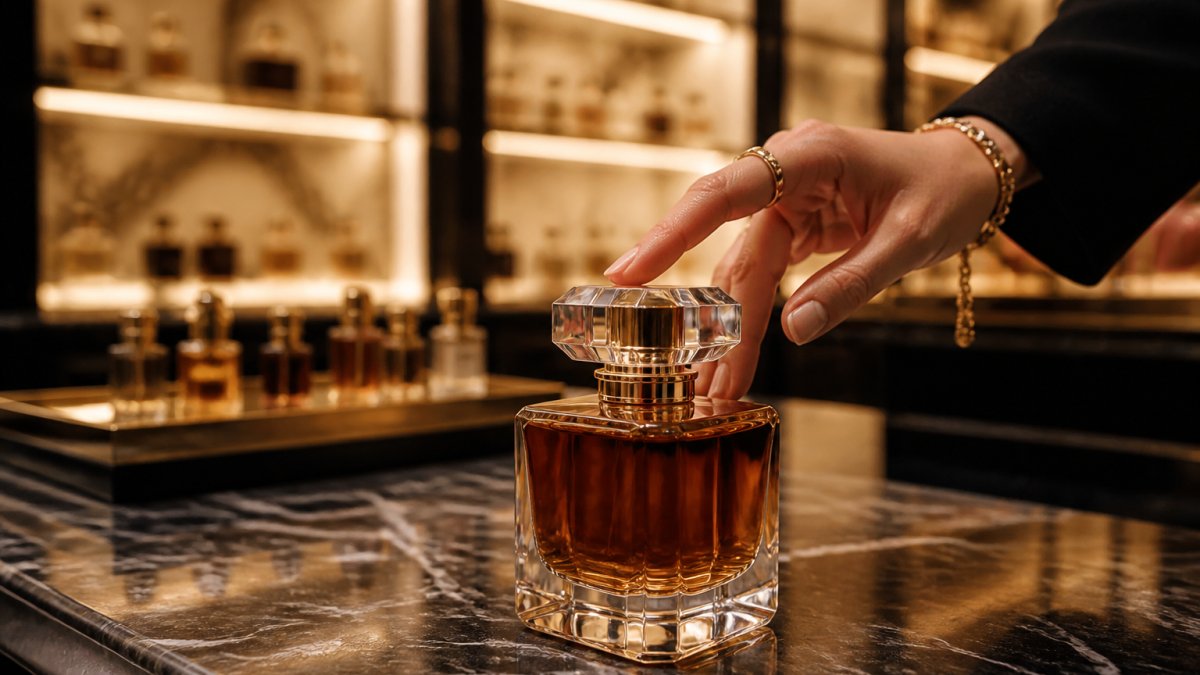
Scent marketing for luxury brands works best when the story appears at every touchpoint, not just inside the bottle. The fragrance is the anchor. Packaging, retail, and digital channels all reinforce it. This section outlines a cohesive omnichannel framework, a gap most guides leave open.
The Omnichannel Scent Narrative Framework
Think of the scent story as a single thread that runs through four layers: product, packaging, physical retail, and digital. Each layer should echo the same emotional promise. Here's how to keep them aligned.
1. Product: The Scent Itself The fragrance is the source text. Its notes, intensity, and character define the narrative. Document the intended feeling in a single sentence, e.g., "grounded confidence" or "quiet elegance." This sentence becomes the brief for every other layer.
2. Packaging: Tactile and Visual Echoes Packaging should translate the scent's mood into weight, texture, and color. A warm, amber-heavy scent might use heavier glass, matte finishes, and deep gold tones. A fresh, citrus-forward scent might use lighter glass, smooth textures, and pale greens or blues. The goal is coherence: a customer should be able to guess the scent family from the packaging alone.
3. Physical Retail: The Live Test In-store, the tester is the primary storytelling tool. Place testers on a surface that matches the scent's character, stone for woody scents, soft fabric for musks. Train staff to describe the feeling, not just the notes: "This one feels like a quiet evening" rather than "This has bergamot and cedar." Ambient scent in the store should be subtle and consistent with the brand's core profile.
Shop Personalized Perfume Bottles →
4. Digital: Descriptive and Interactive Product pages should lead with the emotional promise, then support with notes. Use language that evokes the feeling: "commanding" or "intimate" rather than a dry list. Interactive tools like scent quizzes can guide discovery, but they must reflect the same narrative. If your brand story is "refined elegance," the quiz should not recommend the boldest scent in the line without context.
Keeping the Thread Consistent
A common failure is treating each touchpoint as a separate project. To avoid this, create a one-page narrative brief that summarizes the scent's emotional promise, key notes, and target customer. Share it with packaging designers, retail staff, and digital marketers. Review new materials against it before launch.
The Nielsen research on sensory marketing has long shown that engaging the senses builds stronger brand recall than sight alone. Consistency across touchpoints amplifies that effect.
Digital innovation now extends the story further. Some brands use app-based scent quizzes and NFC-enabled packaging to guide discovery. The goal stays the same: let the customer feel the narrative before they commit.
The Role of a Fragrance Discovery Set in Building Emotional Connection
A fragrance discovery set lowers the risk of buying blind. It lets a customer live with several scents before choosing a favorite. That trial period is where emotional connection forms.
For luxury goods, this matters. A single bottle is a real investment, and buyers want confidence. A discovery set turns a cold purchase into a personal journey.
Discovery sets also build customer retention. A buyer who tries four scents is far more engaged than one who scrolls a product page and leaves.
The MASTAAN four-piece 5 ml discovery set contains four 5 ml fragrances.
Personalization and Customization: Turning a Scent into a Personal Narrative
Personalization turns a shared fragrance into a private one. When a bottle carries a name or a message, the scent stops being a product and becomes a keepsake.
This is where customization earns its place in luxury. A personalized bottle works as a gift, a milestone marker, or a signature piece. The story now belongs to the buyer, not just the brand.
Selected MASTAAN bottles can be engraved with a name or special message.
Watch out: personalization only lands when the scent already fits. Engraving a fragrance the buyer does not love just makes an expensive mistake permanent.
How to Measure the Impact of Scent-Led Storytelling on Brand Loyalty
Measuring scent-led storytelling means tracking behavior, not just sales. Loyalty shows up in repeat purchases, referrals, and how often customers talk about the brand.
A simple scorecard helps:
| Signal | What to Track | Why It Matters |
|---|---|---|
| Repeat purchase | Return buyers over time | Shows the scent stuck |
| Discovery to full size | Set buyers who upgrade | Proves the trial worked |
| Referrals | Gift and share activity | Signals emotional pull |
| Engagement | Reviews and messages | Reveals story resonance |
The Harvard Business Review analysis of customer loyalty supports a simple point: emotional connection drives retention more than discounts do.
Choose Your Signature Scent from MASTAAN Perfumes
The story only works when the scent fits the person wearing it. That is the real test of a luxury scent.
Royal Elixir pairs bright bergamot with oud, white amber, and leather. Dark Stone balances citrus with warm woods and creamy tonka. Cherish is described as soft, elegant, and mysterious. La Royale Femme combines sensual florals and soft woods.
Each bottle is designed to feel like a chapter, not a commodity. The Fragrance Foundation overview of fragrance and memory explains why scent lingers in memory longer than most sensory cues.
For readers who want the full picture of how scent creates mystery, this piece on how scent evokes intrigue goes deeper.
Frequently Asked Questions
How can fragrance communicate a luxury brand's identity?
Fragrance can communicate a luxury brand's identity through olfactory notes. For example, Dark Stone is described as a modern statement of strength and composure, with bright citrus, warm woods, and creamy tonka. La Royale Femme combines sensual florals and soft woods.
What makes a scent feel luxurious?
A scent may feel luxurious when it evokes rarity, complexity, or emotional resonance. Personalization, such as engraving a selected bottle with a name or special message, can make it a personal gift.
Can a fragrance tell a story?
A fragrance can suggest a story through its composition and the impressions it evokes. MASTAAN's product descriptions use evocative language to describe its fragrances.
How does a fragrance discovery set help me find my signature scent?
MASTAAN's discovery set contains four 5 ml fragrances, offering a way to explore them before choosing a full-size bottle.
Finding a fragrance that tells your story takes more than a quick scroll. It takes a brand willing to build a real narrative and a buyer willing to explore it. MASTAAN Perfumes offers curated blends like Royal Elixir, Dark Stone, Cherish, and La Royale Femme, plus a discovery set and engraved personalization on selected bottles. Get started with MASTAAN Perfumes and find the scent that tells your story.