Table of Contents
- Why Fragrance Fades: The Science Behind Scent Retention
- Prep Your Skin: Moisturize Before You Spray
- Best Pulse Points for Perfume Application
- Why Does Perfume Fade Quickly on Dry Skin?
- Perfume Layering Techniques for All-Day Wear
- Application Mistakes That Kill Longevity
- Storage, Travel, and Reapplication Strategies
- Frequently Asked Questions
Last Updated: September 18, 2026
Why Fragrance Fades: The Science Behind Scent Retention
Most people blame their perfume when a scent disappears by lunch. The real culprit is usually how fragrance interacts with skin, air, and time. Understanding that process is the first step in learning how to make perfume last longer on skin, and it changes which products you buy and how you wear them.
Fragrance is built in layers. Top notes are the light, bright scents you smell first, and they evaporate within minutes. Heart notes appear next, lasting a few hours. Base notes like oud, amber, and leather are the heavy molecules that linger longest. A fragrance built on heavier base notes tends to outlast a citrus-forward one, but actual wear time still depends on the formula's concentration, your skin chemistry, and the environment you're wearing it in.
How Concentration and Base Notes Affect Longevity
Fragrance concentration is one of the biggest factors in how long a scent stays on your skin, though it isn't the only one. The industry uses a rough ladder of aromatic-compound percentages, and knowing it gives you a general starting point for wear time before you ever spray:
- Eau de Cologne (EDC): roughly 2-5% aromatic compounds. Wear time is typically 1-3 hours. Best for a quick refresh or hot weather.
- Eau de Toilette (EDT): roughly 5-15%. Wear time is typically 3-5 hours. The most common format for daytime and warm-weather scents.
- Eau de Parfum (EDP): roughly 15-20%. Wear time is typically 5-8 hours. The sweet spot for most people who want a scent to survive a workday.
- Extrait de Parfum / Parfum: roughly 20-40%. Wear time can stretch past 8 hours, and often into the next morning on skin. A little goes a long way.
These ranges are conventions, not regulations, a house can label a 12% juice as EDP if it wants, but they are reliable enough that most fragrance professionals use them as a first filter when judging longevity. The higher the concentration, the slower the evaporation rate tends to be, which can extend scent retention, but concentration alone doesn't guarantee how long a fragrance lasts, skin type, climate, and application all play a role too.
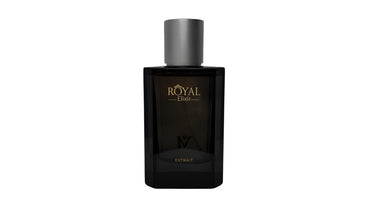
Base notes matter just as much. Resins, woods, and musks act as fixatives. They hold lighter molecules to the skin and release them slowly, which is one reason heavier compositions tend to read as longer-wearing than lighter ones, though actual performance still varies with concentration, skin, and climate. Royal Elixir, built on Sicilian bergamot and pink pepper over oud, white amber, rosemary, leather, and musk, is a good example of a fixative-heavy structure. Not every heavy-base fragrance leans that direction, though: Dark Stone pairs bright citrus with warm woods and creamy tonka, showing that a top-note-forward opening can still sit on a longer-wearing base. If you're not sure which structure suits you, the MASTAAN Discovery Set is a low-commitment way to compare a few side by side.
Prep Your Skin: Moisturize Before You Spray
Dry skin sheds fragrance fast. Moisturized skin holds it far longer. This is the simplest and most overlooked fix, and it costs almost nothing.
Apply an unscented lotion or body oil to your pulse points right after you shower, while skin is still slightly damp. The moisture creates a barrier that slows evaporation and gives fragrance molecules something to cling to. Wait a minute for the lotion to absorb, then spray.
Unscented Lotion vs. Petroleum Jelly vs. Body Oil
Each base works differently, and your skin type decides which fits best.
| Base | Best For | How It Helps | Watch Out For |
|---|---|---|---|
| Unscented lotion | Most skin types | Adds moisture, slows evaporation | Scented lotion clashes with your perfume |
| Petroleum jelly | Very dry skin, pulse points | Creates a heavy seal that traps scent | Too much feels greasy |
| Body oil | Dry to normal skin | Spreads evenly and creates a moisturized surface fragrance may perform better on | Can feel heavy in humid weather |
A common mistake is reaching for a scented body lotion. It competes with your fragrance and muddies the scent profile. Stick with unscented, or match it to the same fragrance notes if you can.
Best Pulse Points for Perfume Application
The best pulse points for perfume are the wrists, the base of the throat, behind the ears, and the inner elbows. These spots emit body heat, and heat pushes fragrance into the air, helping create a steady scent trail — though how long it carries depends on the formula, the environment, and your own skin.
Apply to two or three points, not all of them. More is not better. Over-spraying overwhelms your nose and triggers olfactory fatigue, the reason you stop smelling your own perfume hours before anyone else does.
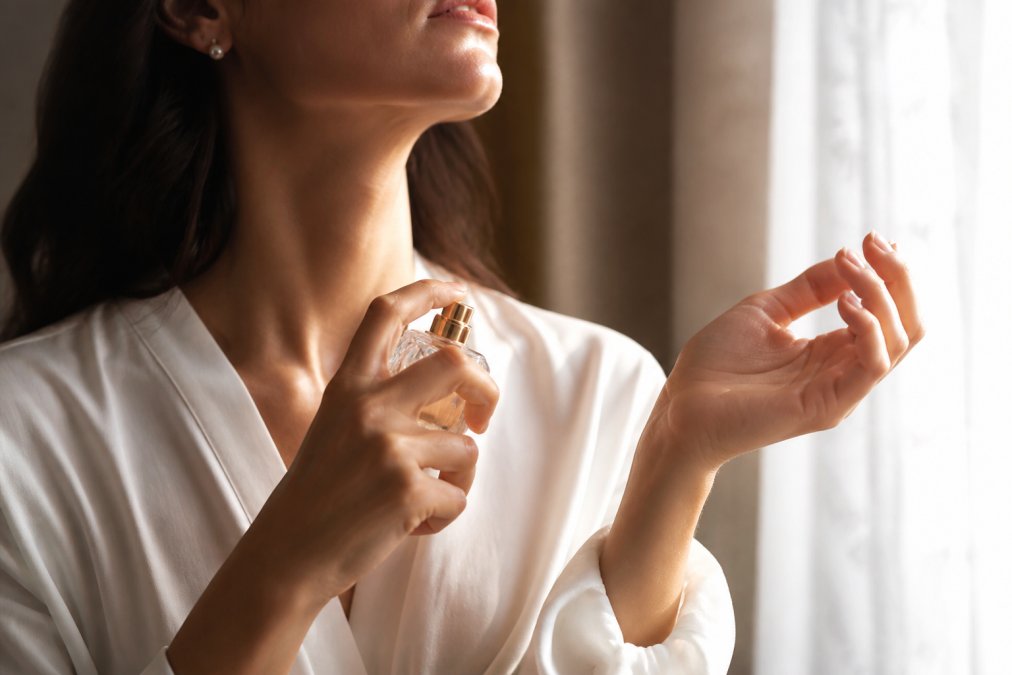
Here is where technique separates a scent that lasts from one that vanishes:
- Spray from 6 to 8 inches away for even coverage
- Target warm areas: wrists, throat, behind the ears, inner elbows
- Never spray and then rub the wrists together
- Let each spray dry on its own before dressing
Rubbing can alter the fragrance's opening and increase evaporation through friction and heat. Let each spray dry naturally on the skin instead.
Why Does Perfume Fade Quickly on Dry Skin?
Perfume fades quickly on dry skin because there is no moisture to hold the fragrance molecules in place. Dry skin has a weaker barrier, so oils and aromatic compounds evaporate faster and absorb unevenly.
Skin chemistry plays a role too. Everyone's skin has a slightly different pH balance, and that shifts how a fragrance develops. A scent that lasts eight hours on one person may fade in three on another. That is not a flaw in the perfume. It is biology.
Building a Routine Around Dry Skin
If you have dry skin, build a routine around it:
- Moisturize pulse points before every application, ideally while skin is still damp from the shower
- Choose oil-based or parfum-strength fragrances over alcohol-heavy sprays
- Reapply to moisturized skin, never to dry skin
- Keep a small travel atomizer for touch-ups
Perfume Layering Techniques for All-Day Wear
Perfume layering is the practice of building a scent in stages using matching products, and it is one of the most reliable ways to extend wear. The idea is simple: each layer reinforces the last.
A few layering rules that actually work:
- Match by fragrance notes, not by brand
- Pair a lighter scent over a heavier base
- Use an oil-based perfume first, then an alcohol-based spray
- Test combinations on skin before committing to a full day
Application Mistakes That Kill Longevity
Small errors undo good perfume. Fix these and you gain hours of wear without buying anything new.
- Rubbing wrists together after spraying can alter the fragrance's opening and increase evaporation through friction and heat — let it dry naturally instead
- Spraying on dry skin gives fragrance nothing to hold onto
- Applying after you dress puts the spray on fabric instead of skin; fabric can hold fragrance longer, but test an inconspicuous spot first since some perfumes can stain delicate or light-colored fabric
- Over-spraying causes olfactory fatigue, so you smell less, not more
- Storing in the bathroom exposes the bottle to heat and humidity
- Spraying into the air and walking through leaves most of the scent on the floor
Storage, Travel, and Reapplication Strategies
How you store a bottle matters as much as how you wear it. Light and heat break down fragrance molecules over time, which shortens the life of the perfume itself.
For travel and touch-ups:
- Decant a small amount into a travel atomizer
- Keep it in a cool bag, not a hot car
- Reapply to moisturized skin, not dry skin
- Target one or two pulse points for a quick refresh
- Store the full bottle at home to protect it
Frequently Asked Questions
Does Vaseline help your perfume last longer?
Yes. Petroleum jelly creates an occlusive barrier on the skin that slows evaporation and holds fragrance molecules in place. Apply a thin layer to pulse points before spraying. It works especially well for dry skin types, where perfume tends to disappear fastest. Just use a small amount so the texture doesn't interfere with the spray.
What can I mix with my perfume to make it last longer?
Unscented lotion, body oil, or petroleum jelly are the safest options. Apply one as a base before spraying. You can also layer with a matching scented body cream or a complementary fragrance from the same scent family. Avoid mixing perfume into lotion in your palm, as this alters the formula and can shorten wear time.
Does lotion help perfume last longer?
Moisturized skin holds fragrance significantly longer than dry skin. A fragrance-free lotion applied to pulse points before your spritz gives scent molecules something to cling to, slowing evaporation. Let the lotion absorb for a minute or two before spraying so the perfume sits on top rather than mixing into wet cream.
Does skin type affect how long perfume lasts?
Yes. Oily skin tends to hold fragrance longer because natural oils slow evaporation, while dry skin lets perfume fade faster. Moisturizing daily gives fragrance molecules more to cling to, which can help wear time on any skin type.
Fragrance longevity is not a guarantee. It comes down to formula and concentration, moisturized skin, smart application, and proper storage, and results vary by person, environment, and the specific perfume. A higher fragrance concentration can mean longer wear, but concentration alone doesn't guarantee it. MASTAAN Perfumes crafts Luxury niche fragrances across a range of scent profiles, and offers a Discovery Set so you can test them on your own skin. Dark Stone opens with bright citrus over warm woods and creamy tonka, while Royal Elixir blends Sicilian bergamot, pink pepper, oud, white amber, rosemary, leather, and musk. Explore the collection and find the scent that fits your skin and routine.