
Last Updated: November 14, 2026
Quick Summary
Niche perfume is fragrance produced by a house that builds its identity around scent rather than around clothing, accessories, or celebrity licensing. The label describes who made the perfume and why, not how it smells, so a niche scent can be soft and quiet while a designer one can be loud and strange.
- Niche is a business model, not a regulated quality grade certified by any agency.
- Fragrance-first design balances top, heart, and base notes for the dry-down, not the opening.
- Exclusivity follows from smaller production scale rather than from deliberate gatekeeping.
- Longevity is how long a scent stays detectable; projection is how far it travels.
- Wear one sample per day and note how it reads at two and six hours.
Table of Contents
- A Clear Definition of Niche Perfume
- Niche vs. Designer Fragrance Examples
- Creative Freedom and Fragrance-First Design
- Ingredients, Production Scale, and Exclusivity
- How to Choose Niche Perfume for Your Scent Profile
- Niche Perfume for Men: Finding a Signature Scent
- Niche Perfume Price: What You're Paying For
- Try Before You Commit with a Discovery Set
- Frequently Asked Questions
A Clear Definition of Niche Perfume
Niche perfume is fragrance produced by a house that builds its identity around scent rather than around clothing, accessories, or celebrity licensing. That single distinction explains most of what follows, and it is the answer to the question of what makes niche perfume different from the bottle on a department store counter.
The confusion starts because "niche" gets used as a compliment. People hear it and assume it means stronger, rarer, or better. It does not. A niche fragrance can be soft and quiet. A designer fragrance can be loud and strange.
MASTAAN Perfumes is a luxury niche fragrance brand offering distinctive, long-lasting perfumes for men and women.
Business Model vs. Scent Style
Two separate questions hide inside one word. The first is commercial: does the company exist to sell perfume, or does perfume support something else it sells? The second is aesthetic: is the scent conventional or unconventional?
A perfume house can be niche in business terms and completely traditional in style. A fashion brand can release something genuinely odd. Treat the two axes independently and the category stops being mysterious.
Niche vs. Designer Fragrance Examples
The clearest way to see the split is to look at what each type of house is actually selling. A designer fragrance is a brand extension: the perfume carries a name shoppers already recognize from clothing, handbags, or a celebrity deal.
That changes the brief. A designer launch usually needs to appeal broadly enough to justify shelf space in large retailers. A niche release can aim at a narrower audience and accept that some people will dislike it.
For readers who want concrete names before the concept clicks, this roundup of niche perfume brands for beginners puts real examples beside the definition.
How Fragrance Houses Differ from Fashion Brands
Fashion houses answer to seasonal calendars, licensing partners, and retail buyers. Perfume is one line among many. Niche houses answer to the perfumer and the creative director, and the fragrance is the whole business.
That is why a niche release can be polarizing without being a failure. If the intended wearer loves it, the job is done. A mass-market fragrance rarely gets that luxury.
Creative Freedom and Fragrance-First Design
Creative freedom is the engine of the niche model, and it shows up in the brief rather than the marketing copy.
Fragrance-first design also means the composition gets time. Top notes, heart notes, and base notes are balanced for the dry-down rather than for the first thirty seconds in a store. That is why niche scents often seem quieter at the opening and more interesting an hour later.
The trade-off is real. Creative freedom produces distinctive, sometimes unconventional results, and distinctive means not everyone will want to wear them. That is the point.
Ingredients, Production Scale, and Exclusivity
Production scale shapes what a house can afford to put in the bottle, but the relationship is more nuanced than the usual 'small batch equals better materials' story.
Be careful with the assumption that niche automatically means better ingredients. Concentration, ingredient quality, and blending skill are separate variables. A high concentration of a poorly balanced formula is still a poorly balanced formula, and a modest concentration of a well-built composition can outperform it.
What 'Niche' Does Not Guarantee
Niche is not a regulated quality grade. No agency certifies a fragrance as niche, and the term describes a business model rather than a standard for ingredients, naturalness, or performance. A niche fragrance is not automatically more original, more natural, or longer-lasting than a designer release.
That matters when you evaluate sourcing and transparency claims. Ingredient disclosure in fragrance is limited across the industry, and 'natural' is not a synonym for 'safer' or 'better.' If a specific sourcing or material claim matters to you, treat it as a question to verify rather than an assumption to make.
Exclusivity as a Consequence, Not a Strategy
Exclusivity follows from scale rather than from gatekeeping. Limited availability and selective distribution are consequences of producing less, not a strategy to make a fragrance feel important.
The practical result is that availability varies by region, and sample availability becomes the buyer's most useful tool. Before assuming a fragrance is inaccessible, check whether the house offers a discovery set or sample program. Sampling is also the most reliable way to judge whether the materials and construction justify the price for you.
Watch out: treating 'niche' as proof of ethical sourcing or ingredient transparency is a common overreach. Ask the house directly if those claims matter to your purchase.
How to Choose Niche Perfume for Your Scent Profile
Start with what you already reach for, not with what a review calls impressive. Note the families you return to: woody, amber, leather, floral, fresh. That pattern is your scent profile, and it narrows the field faster than any list of trending releases.
Next, separate the three things people confuse. Longevity is how long a fragrance stays detectable on skin. Projection is how far it travels from you. Sillage is the trail left behind as you move.
Skin chemistry matters more than most buyers expect. A fuller walkthrough of identifying preferences sits in this guide to finding your signature scent.
Niche Perfume for Men: Finding a Signature Scent
For men moving away from a long-standing designer bottle, the adjustment is usually about pace, not boldness. Niche perfume for men tends to reward patience: the opening may be less immediately loud, and the character arrives in the base notes.
Woody and leather-driven compositions are the common entry point because they read as sophisticated in professional settings without demanding attention.
The mistake is treating a signature scent as a permanent decision. Most people who land on one have worn through several. Treat the first niche bottle as a step in a longer process and the pressure drops.
Niche Perfume Price: What You're Paying For
Niche perfume price varies by brand and concentration. The price of a bottle is a separate question from how it performs on your skin, so sampling is the most reliable way to judge value.
That distinction matters because price and quality are separate variables. A high price can reflect genuine investment in materials and perfumery time, or it can reflect positioning and packaging. The only way to know which you are paying for is to sample the fragrance and judge it on your own skin.
A Practical Cost-Per-Wear Framework
Cost per wear is the honest metric for any fragrance, and it is simple to calculate. Divide the bottle price by the number of times you realistically expect to wear it. A fragrance worn three times a week for a year delivers roughly 150 wears; one worn twice and abandoned delivers two. The sticker price tells you what you spent. Cost per wear tells you what you got.
Use these questions to estimate cost per wear before you commit:
- How often will you actually reach for it? Match the scent to your real life, not your aspirational one. An office-safe composition worn on weekdays will see far more wears than a dramatic evening scent.
- How much do you apply per wear? Two to four sprays is a common range. A larger bottle at the same concentration stretches further per dollar.
- How does it perform on your skin? Longevity and projection vary by formula, skin, application, and environment. A fragrance that fades in three hours on you will cost more per wear than one that lasts through a workday, regardless of price.
- Does the concentration match your use? Eau de parfum and extrait concentrations typically require fewer sprays than eau de toilette, which changes the math.
Matching Priorities to Buyer Type
Different buyers should weight value differently. The table below is a framework, not a rulebook.
| Buyer type | What to prioritize | Why it matters |
|---|---|---|
| First-time niche buyer | Sampling before committing | Reduces the risk of an expensive mismatch |
| Daily wearer | Versatility and dry-down | Cost per wear drops with frequent use |
| Occasion wearer | Distinctiveness and projection | Fewer wears, so impact per wear counts more |
| Gift buyer | Personalization options | A named bottle reads as considered |
For a fuller breakdown of whether the spend holds up, this analysis of whether expensive perfumes are worth the money works through the math.
Watch out: assuming a higher price guarantees better ingredients or performance is the most common value mistake in this category. Sample first, then decide whether the price is justified for you.
Try Before You Commit with a Discovery Set
A discovery set is the single best defense against a blind buy.
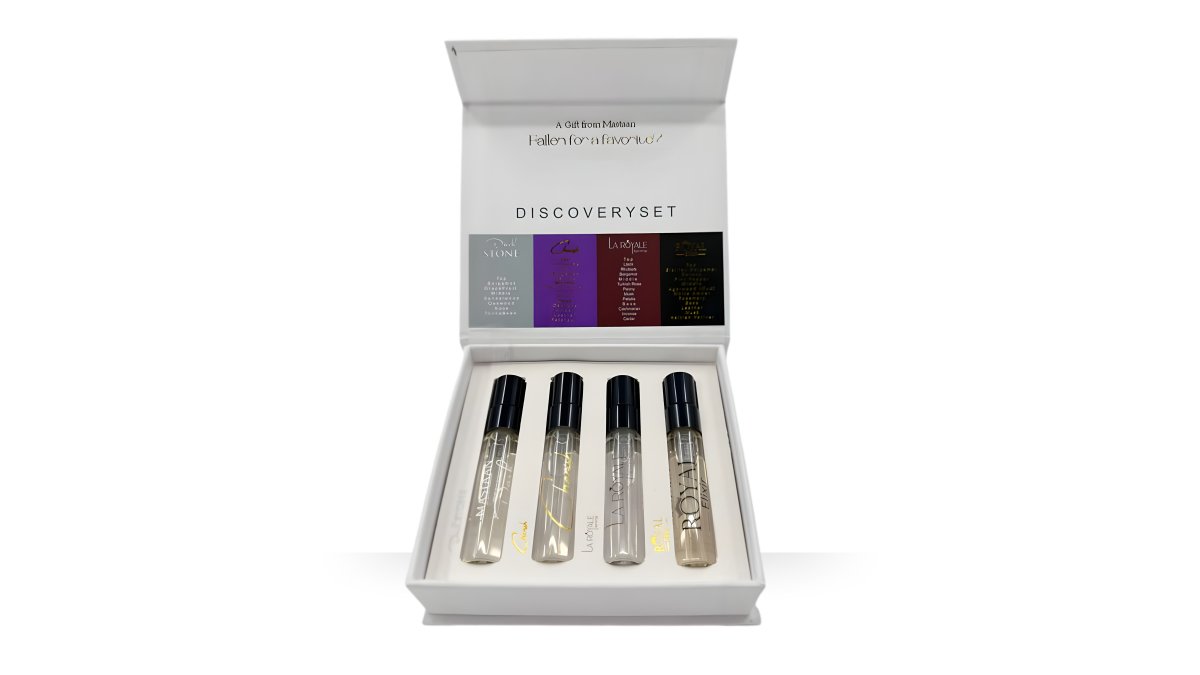
The Mastaan Discovery Set includes four 5 ml fragrances: La Royale Femme, Royal Elixir, Dark Stone, and Cherish. For anyone comparing options first, this breakdown of niche perfume discovery sets covers what to look for.
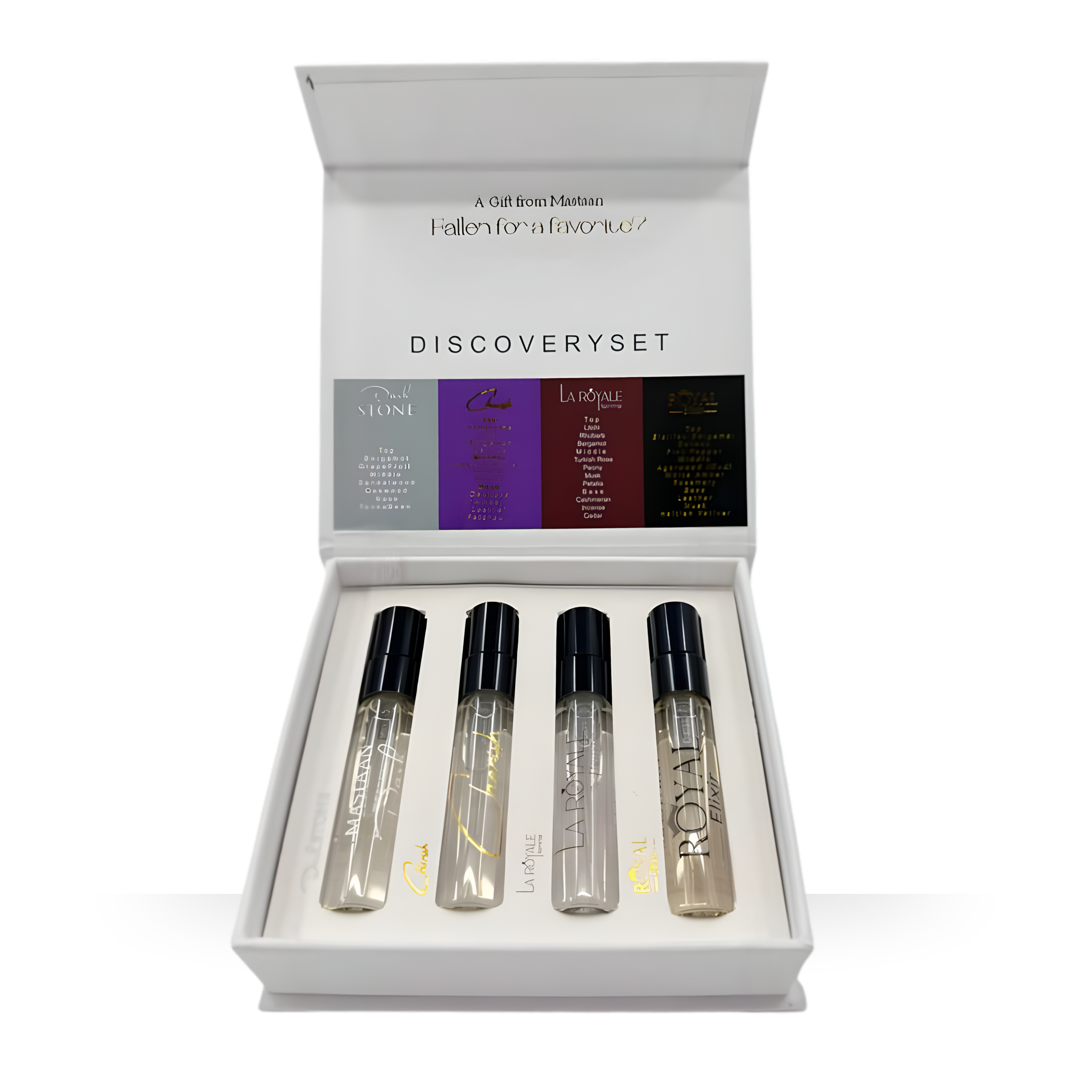
Sampling order matters. Wear one fragrance per day, apply to pulse points, and resist layering. Note how each one reads at the two-hour and six-hour marks.
Watch out: spraying a sample on a paper strip in a shop and deciding on the spot is the most common way buyers end up with a bottle they never reach for.
The gap between a fragrance that sits in a drawer and one that becomes a signature usually comes down to sampling discipline.
Frequently Asked Questions
Are niche fragrances better than designer perfumes?
Not inherently. Niche perfume often uses higher concentrations and more distinctive scent profiles, but 'better' depends on your preferences. Designer fragrances are formulated for broad appeal and may suit everyday wear, while niche scents offer originality and creative freedom. The key difference is that niche houses prioritize artistic expression over mass-market trends. Sampling both helps you decide which style fits your taste and lifestyle.
How can I tell if a perfume is niche?
A niche perfume typically comes from a fragrance house that focuses solely on perfumery rather than fashion or beauty products. Signs include limited distribution, a narrower audience, and a fragrance-first design philosophy. The brand's identity centers on scent creation, not apparel or cosmetics. You'll often find niche perfumes sold through selective distribution or directly from the brand's website, rather than in every department store.
Are niche perfumes always more expensive?
No. While niche perfume price can be higher due to smaller production runs and costly raw materials, many niche brands offer accessible options. For example, discovery sets let you try multiple scents at a lower cost before committing to a full bottle. Prices vary widely, so compare the concentration (eau de parfum vs. extrait) and bottle size to judge value. Cost per wear is a more useful measure than the sticker price alone.
How do I choose a niche perfume for the first time?
Start by identifying scent families you already enjoy, such as woody, floral, or amber. Order a discovery set to sample several fragrances on your skin over a few days, since skin chemistry affects dry-down. Pay attention to top notes, heart notes, and base notes as they evolve. Consider your typical occasions, like professional settings or evening wear, and read descriptions carefully. Sampling before buying is the most reliable way to find a signature fragrance.
How long does niche perfume last on the skin?
Longevity depends on concentration, skin chemistry, and the fragrance's base notes. Eau de parfum and extrait de parfum generally last longer than eau de toilette. Niche perfumes often use higher concentrations, which may help improve wear time, but results vary by person. Applying to moisturized skin and pulse points can extend longevity. Always test a sample on your own skin to see how long it lasts for you.
What are some examples of niche perfume brands?
MASTAAN Perfumes is a luxury niche fragrance brand offering Royal Elixir, Dark Stone, Cherish, La Royale Femme, and a discovery set with four 5 ml fragrances. These scents feature Oriental-French compositions with notes like oud, amber, leather, and florals. Other niche houses exist, but MASTAAN focuses on distinctive, long-lasting perfumes for men and women, with options for personalized engraving on select bottles.